Center Street Law
A firm founded in 1939 had a website that played no part in how clients found it. Now it's built to be found by families across Washington, and the firm keeps it up to date itself.

The challenge
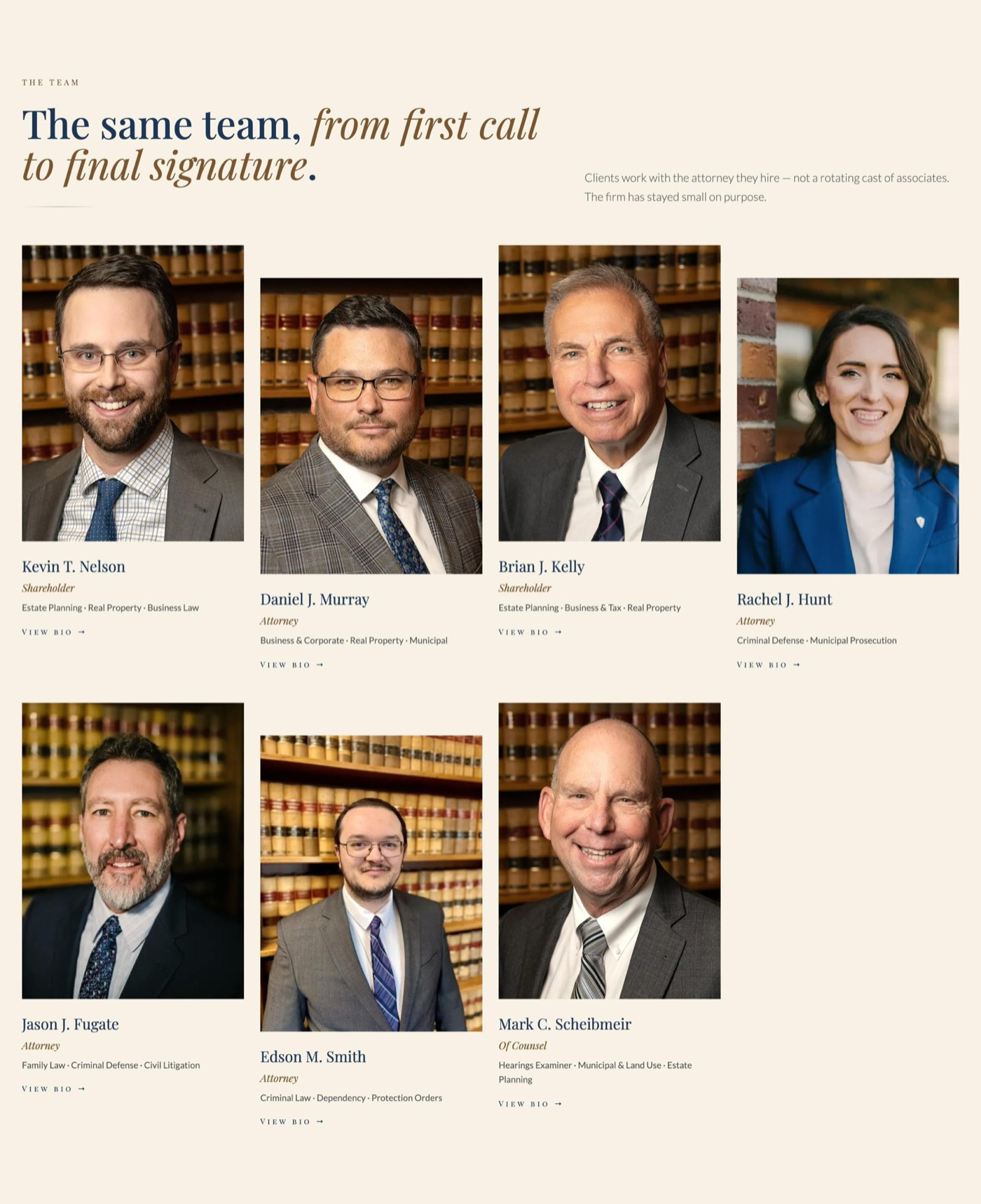
Scheibmeir, Kelly & Nelson has practiced law in downtown Chehalis, between Seattle and Portland, since 1939. Its seven attorneys cover estate planning, criminal defense, business, real property and landlord-tenant work. The old site was a single page with attorney bios and no analytics, and the firm couldn't remember a client who had found it online. Local clients came in on their own, but as a new generation took over from the senior partners, the firm didn't want to look its age. Estate planning, the flagship practice, serves clients across Washington, and those clients had to be able to find the firm. And the firm wanted to make its own edits.
What we built
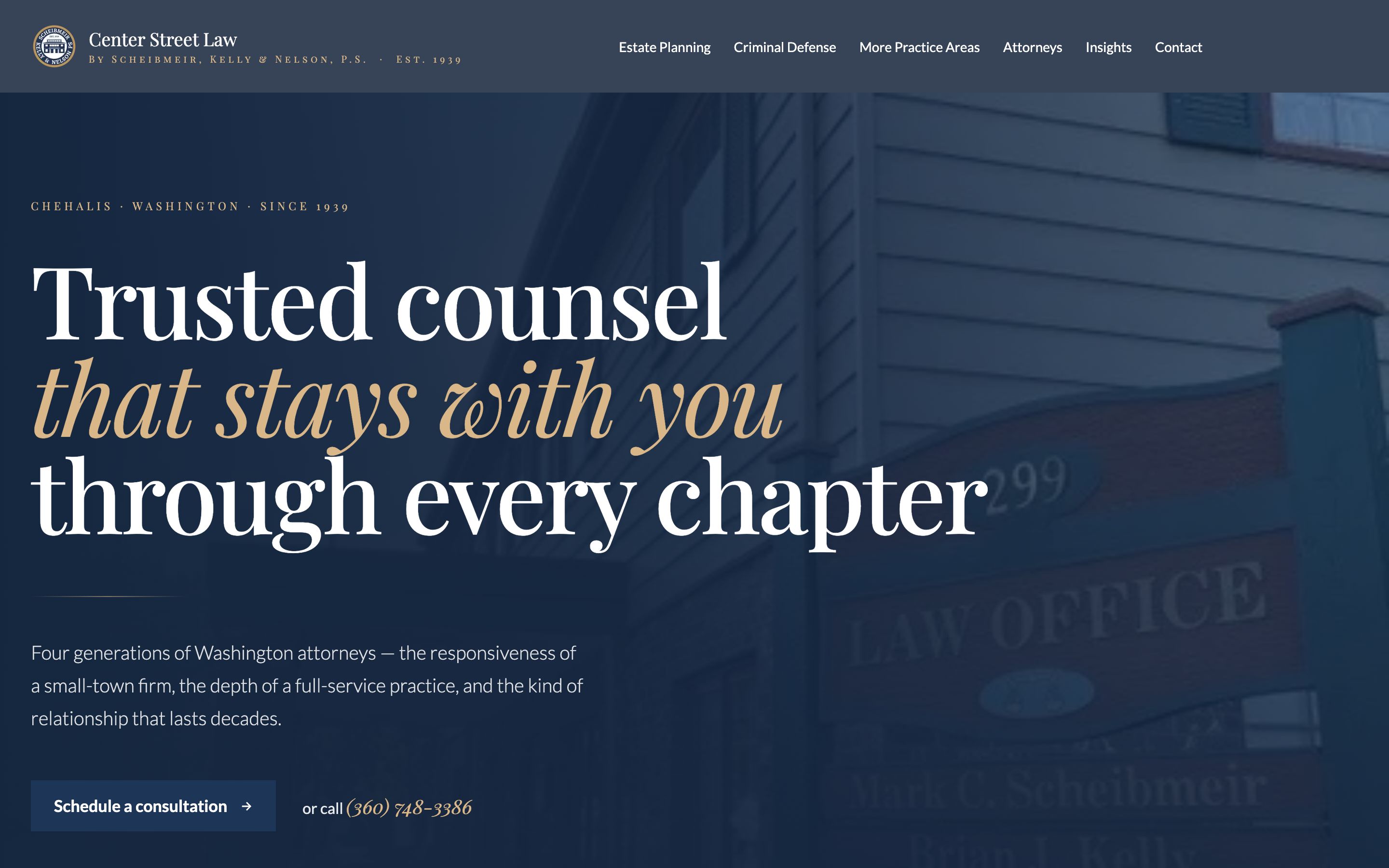
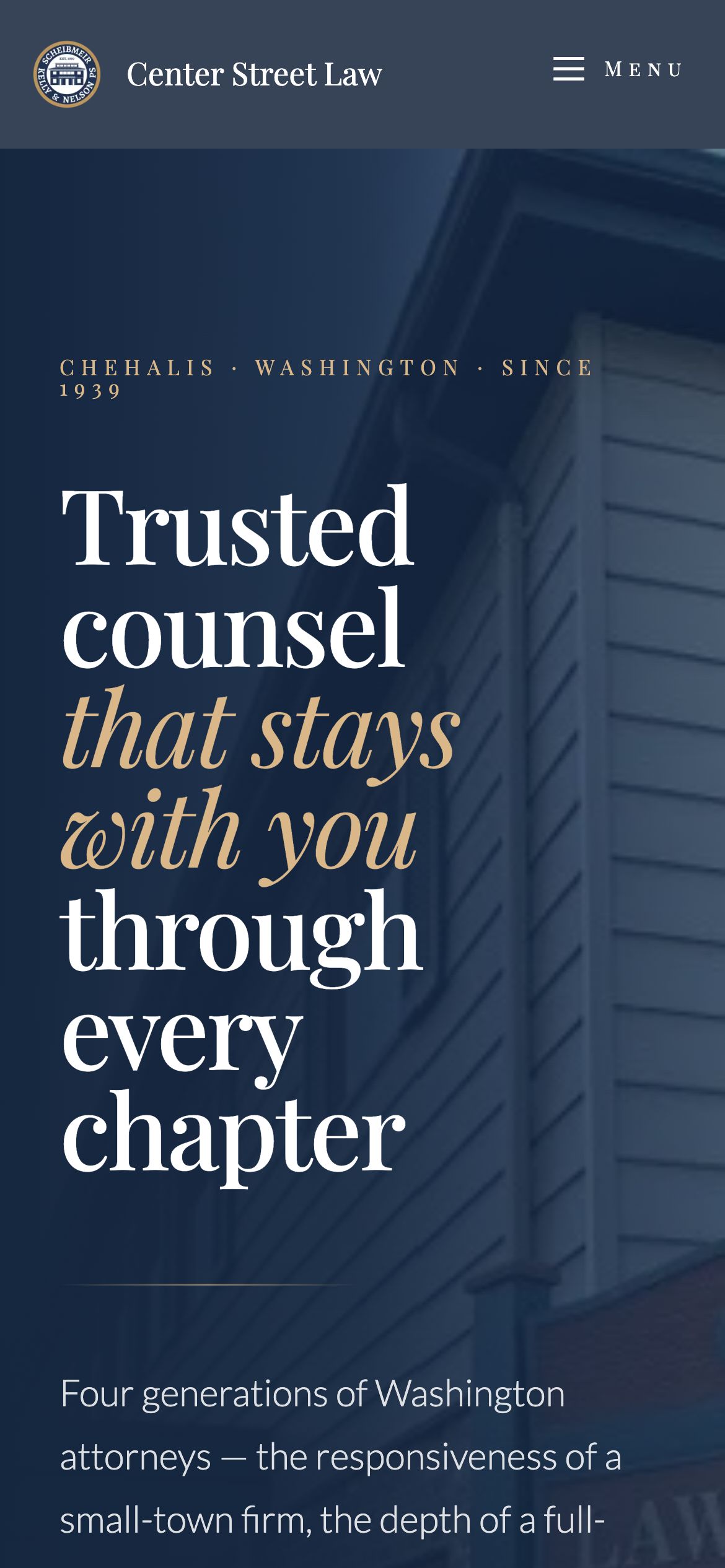
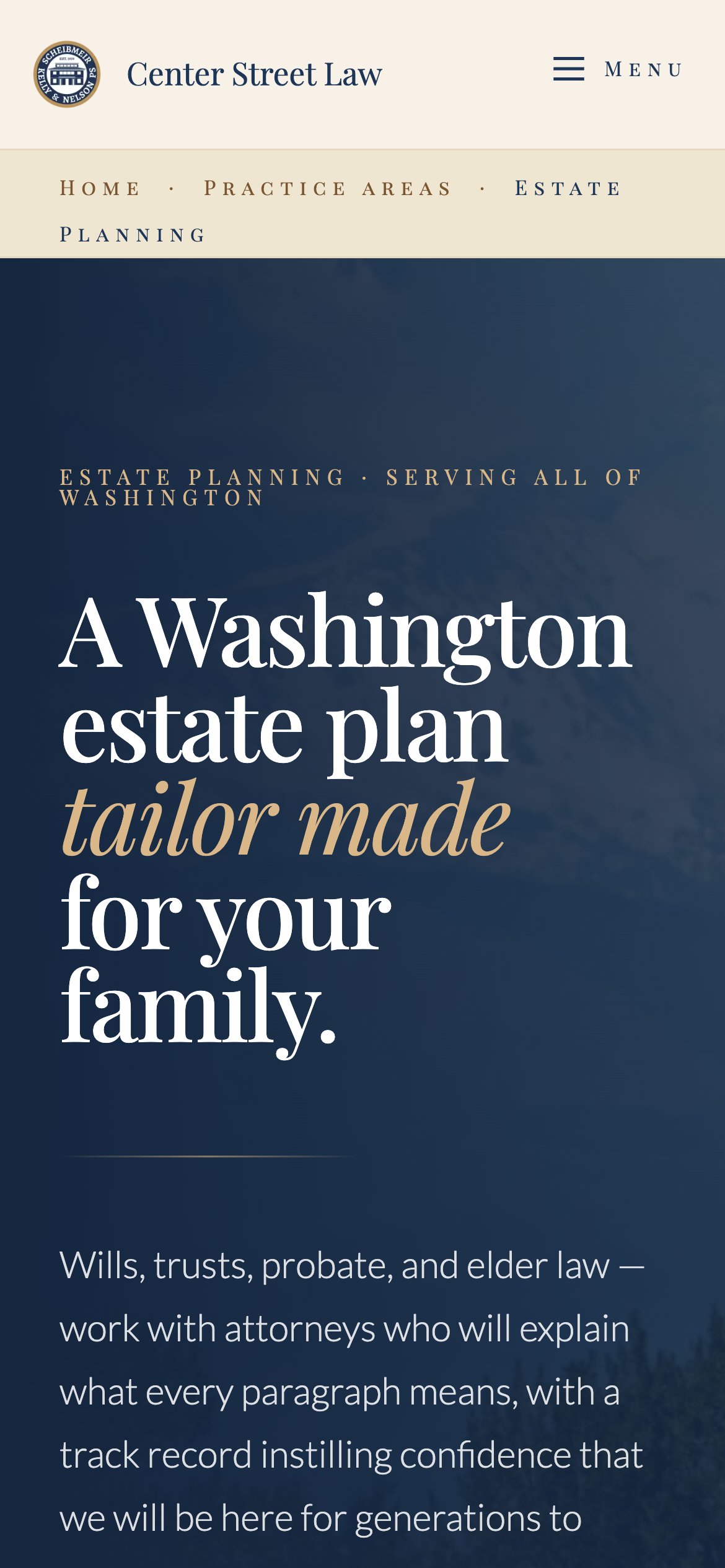
We designed the site around two front doors. The homepage speaks to the local families and businesses who have trusted the firm for decades. A dedicated Estate Planning page speaks to anyone in Washington looking for a plan, wherever they live.
Under both sits an editable content model in Statamic. Headlines, bios, practice-area pages and office details are fields the firm's team can change, while the design stays locked.
- Custom design system in Tailwind CSS v4: navy and gold, Playfair Display, self-hosted fonts.
- One practice-area template; a landing-page toggle and hero options turn Estate Planning and Criminal Defense into landing pages.
- About 200 editable fields, with one Site Settings screen for phone, hours, links and banner.
- Contact form with conditional conflict-check fields, sent to the front desk and kept working under static caching.
- Responsive WebP images and srcset, cutting homepage weight from 2.4 MB to under 0.5 MB.
- Structured data for the firm, attorneys, services and FAQs, plus a sitemap and an editor handbook inside the control panel.
Two front doors for one firm
The firm has two kinds of visitors. Existing clients and neighbors in Lewis County want a familiar firm they can reach quickly. People elsewhere in Washington who need a will or trust are comparing firms they've never heard of.
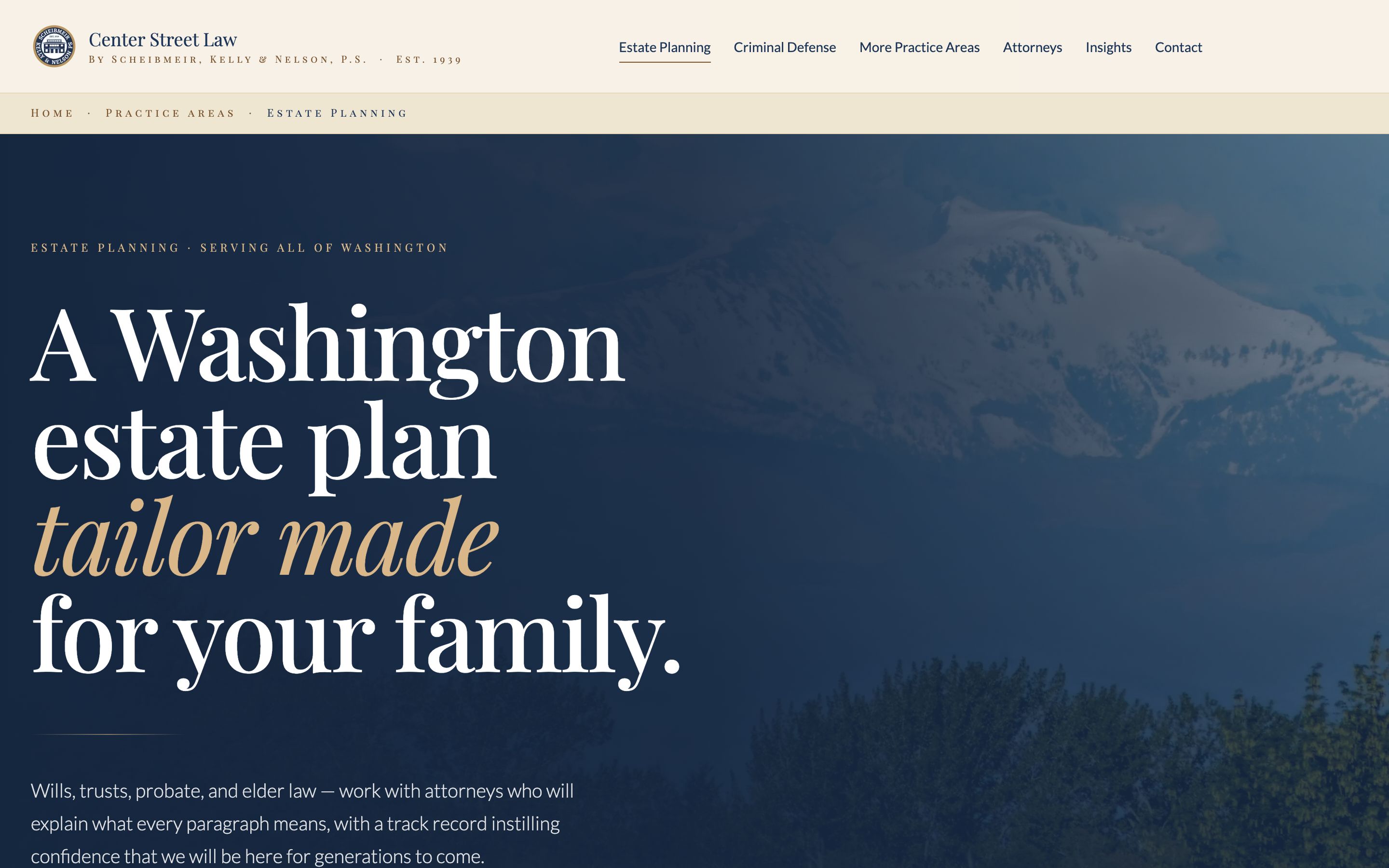
The homepage is for the first group. It shows the firm's own office building and its decades in Chehalis, with the phone number in the first screen. The Estate Planning page is for the second group. It leads with "Serving all of Washington," walks through what a plan covers, and answers common questions on the page itself.
Criminal defense got the same treatment: its own landing page, built for people facing charges, with the phone number in the main button.
A quicker path than the phone line
The firm is steering clients toward email and appointments rather than phone calls. The site gives each kind of visitor a path that doesn't start with the phone.
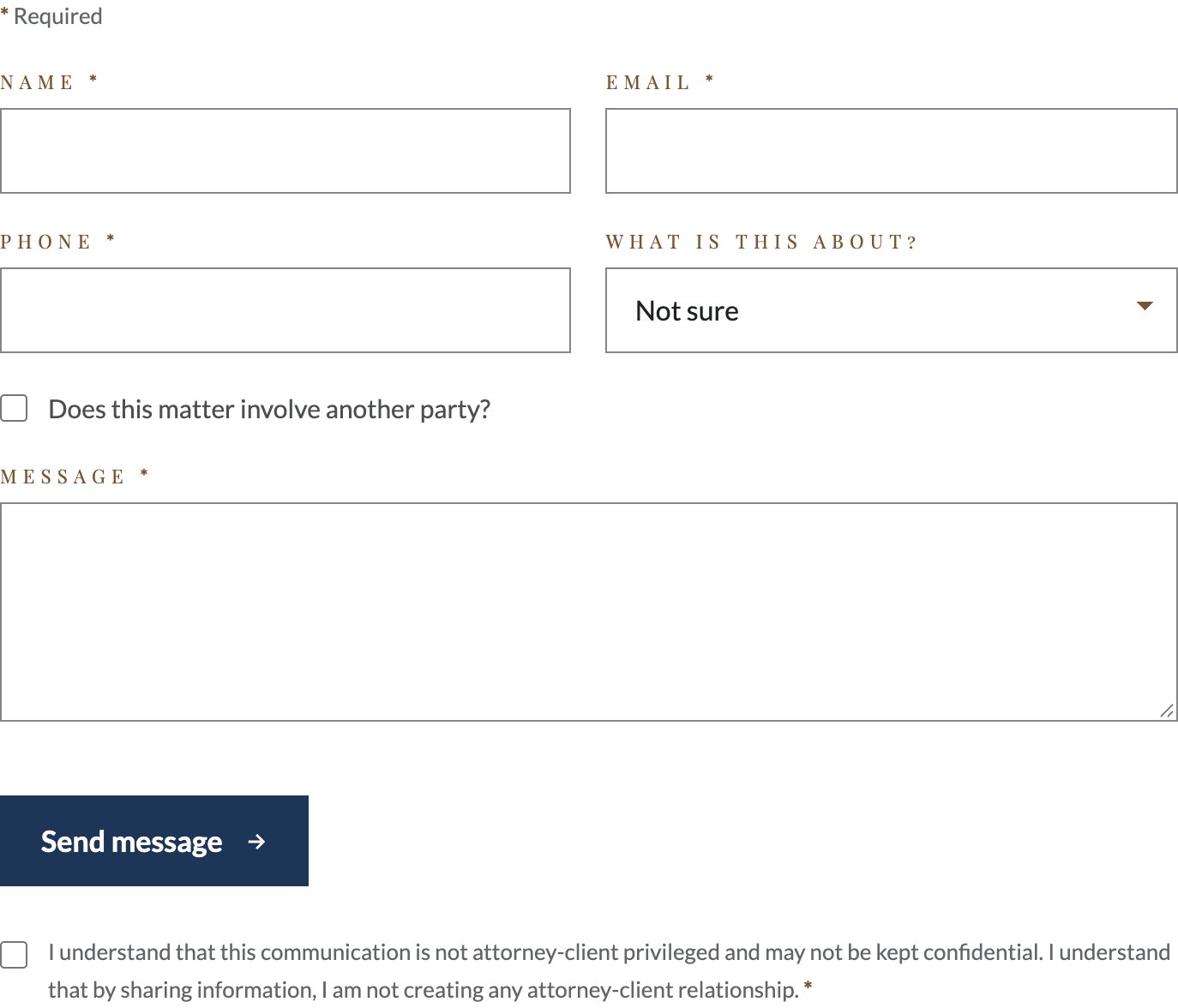
New clients get a contact form that goes straight to the front desk. Its conditional fields ask whether the matter involves another party and who that is, so the firm can check for conflicts before anyone replies. A required acknowledgement makes clear that sending the form doesn't create an attorney-client relationship. The contact page also lists the real office hours, including the early close on Fridays.
Existing clients have a path of their own, straight into the firm's client portal.
Existing clients, one click from their case
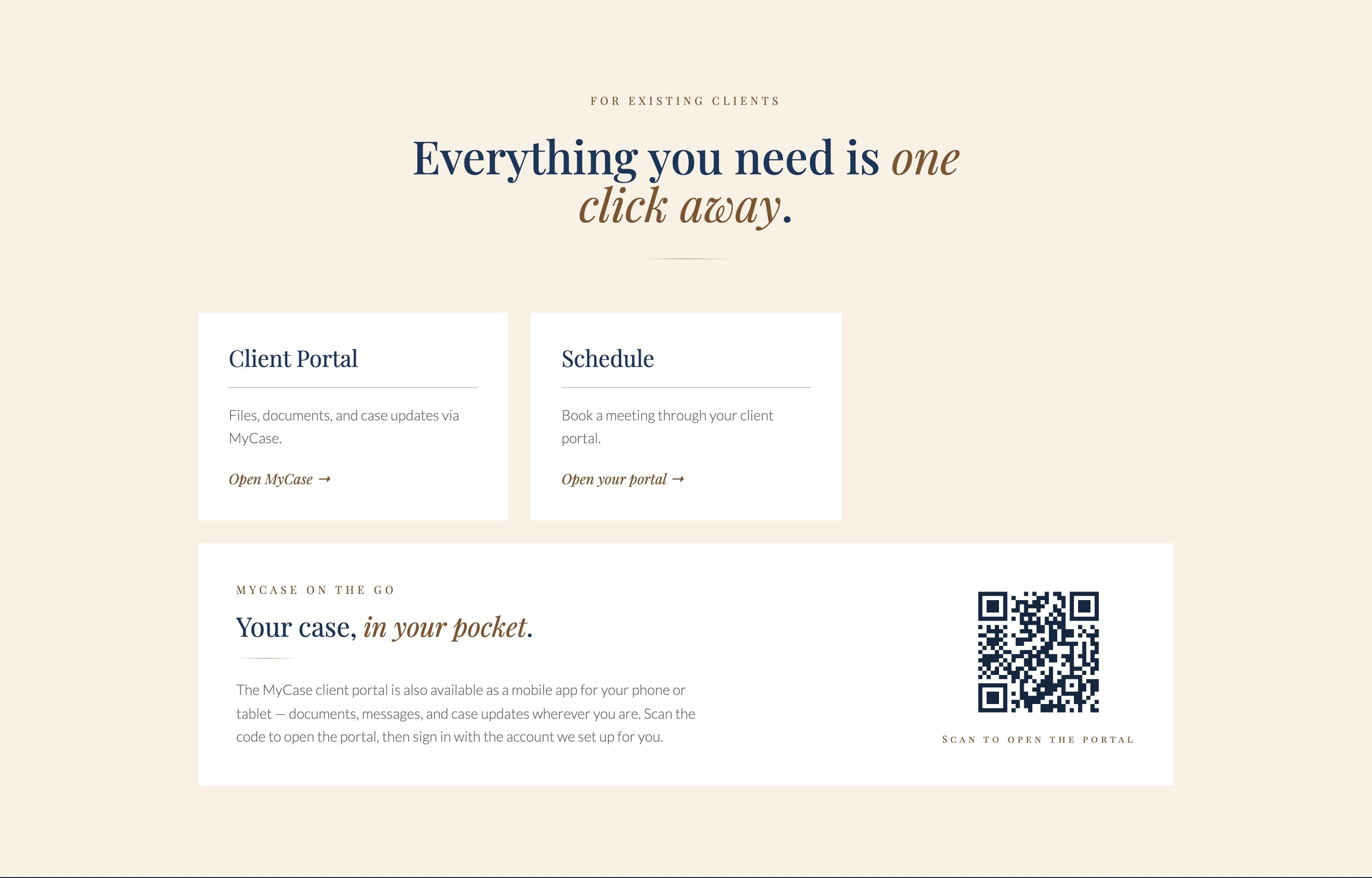
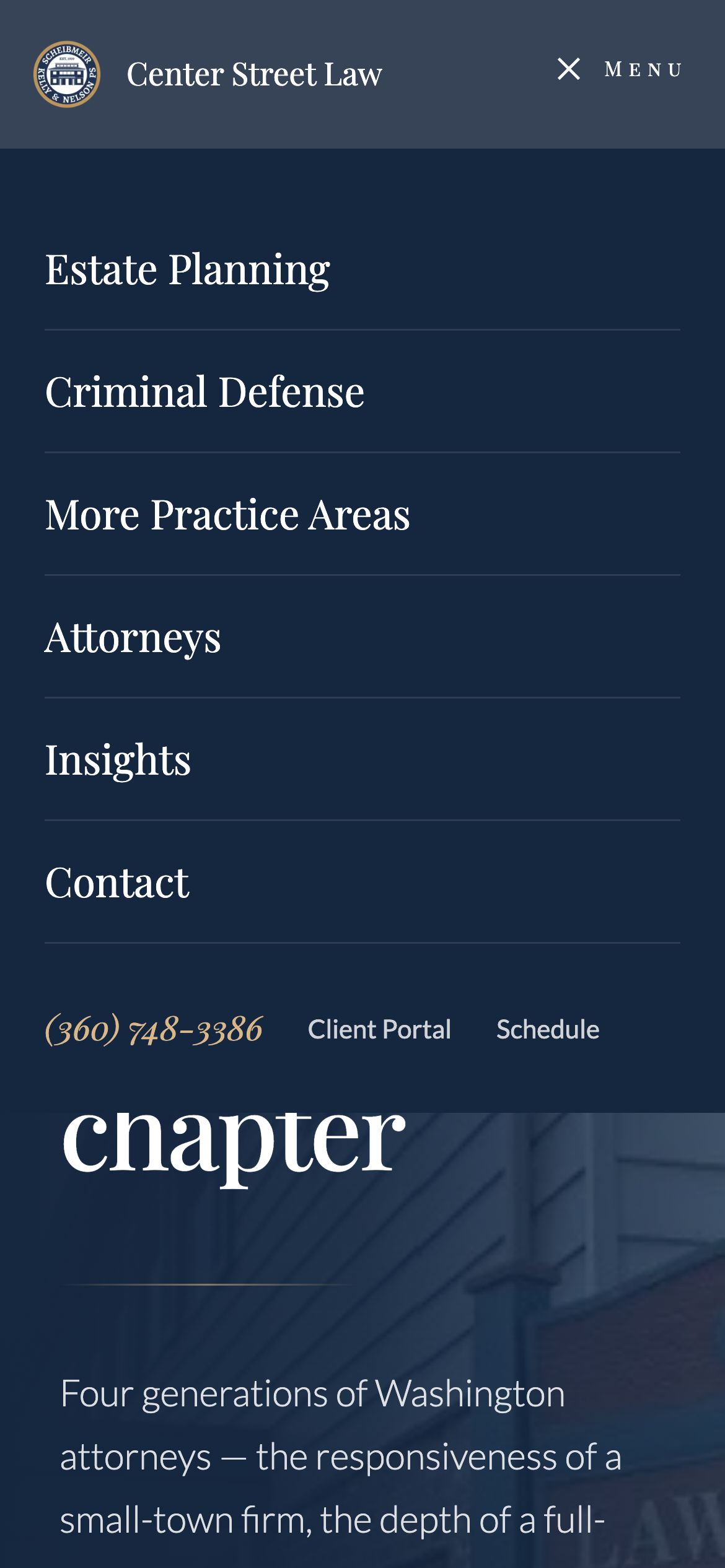
The firm runs its client work in MyCase, which handles documents, messages and meeting booking. The site doesn't try to rebuild any of that. It links straight to the portal from the contact page, the footer and the mobile menu, and adds a QR code for the MyCase app.
Existing clients who need a document or a meeting can go to the portal instead of the phone line. The portal links live in one Site Settings screen, so if the firm ever changes providers, it updates a single field.
Every page editable, the design locked
We built the layout first, so the firm could review and approve the design quickly, then moved every word into fields. The firm needed to edit its own copy without being able to break the design or move a page.
Moving the words into fields
The copy now lives in editable fields and a shared Site Settings screen. That change touched 80 files. It also folded the Criminal Defense layout into the shared practice-area template, which now serves every practice page. When the last of the copy moved over, we rendered every page before and after and compared them. Apart from the changes we meant to make, the HTML was byte-for-byte identical.
One setting for the phone number
The phone number appears in 24 places, including 15 tap-to-call links. We traced every one back to a single setting, so a new number can't leave a link dialing the old one. The attorney count is calculated from the profiles, so it stays right as the team changes.
Bold and italic without code
Editors can still use the design's gold italics. They wrap words in asterisks, and the site applies the style.
Accessible and findable from day one
For a law firm, an inaccessible website is a legal risk, and the firm made accessibility a requirement from the start. Before launch we ran automated accessibility tests on every template, tested the templates with only a keyboard, and measured contrast where text sits over photos. We fixed what we found, from a gold that read too faint to form borders that were hard to see. Every template scored 100 for accessibility in Lighthouse. After launch, the live homepage and Estate Planning page also scored 100 for SEO and best practices.
For search, the audit found page titles carrying the software's name, blank descriptions, no sitemap and no canonical tags. We fixed all of them before launch. The site now describes the firm, each attorney, each service and each FAQ in structured data, so search engines know who practices what, and where.
A launch that kept the old links working
The firm wrote and reviewed its content on the server that became the live site. That server stays hidden from search engines unless it's running on the real domain. Launch took a DNS switch and a few server settings, with no rebuild and no content to copy across.
Every address from the old site still works. The six attorney bios redirect to their new profiles, the homepage stays where it was, and leftover WordPress addresses tell search engines they're gone for good rather than returning errors.
Every save in the control panel is also recorded in the project's history, so any edit can be traced or undone. After one training call, the firm's team edited the homepage, practice-area pages and their own bios. They saved dozens of edits before launch and kept editing the day after.
Explore another project.
Let's see what your site could be.
Send us your current site and we'll give you a free, honest review — the same first look we'd do for a paying client.