Park Cities Presbyterian Church
A big, busy church with a 35-year archive wanted a site that welcomes first-time guests without burying what its members rely on.
The challenge
Park Cities Presbyterian is one of the largest congregations in the Presbyterian Church in America, with something happening almost every day of the week. Its website dated from 2014 and ran on Symphony, an aging CMS with little support left. PCPC's web manager called it "a rehash of a rehash of a rehash." Members knew where things were, but first-time guests met a wall of options. Behind it sat sermons back to 1991, weekday study audio, podcasts, and a weekly devotional, while events lived in Ministry Platform widgets that search engines couldn't see. PCPC wanted something enduring and unmistakably Presbyterian, not a new skin on the old structure.
What we built
We built a guest-first front door on top of a deep resource library. Discovery and design reshaped the site around what a first-time visitor needs, while the platform underneath moved 35 years of sermons and studies out of the old CMS and made Ministry Platform the source of truth for events. PCPC's small web team manages it all from one control panel, with page-building blocks that keep layouts consistent no matter who is editing.
- Guest-first information architecture and design system, from discovery through final designs.
- Block-based page builder, delivered with 29 content blocks that keep layouts consistent.
- Ministry Platform sync for events, volunteer opportunities, parishes, and ministries, with registration on each event.
- Re-runnable importers that moved 35 years of media and devotionals out of two Symphony sites.
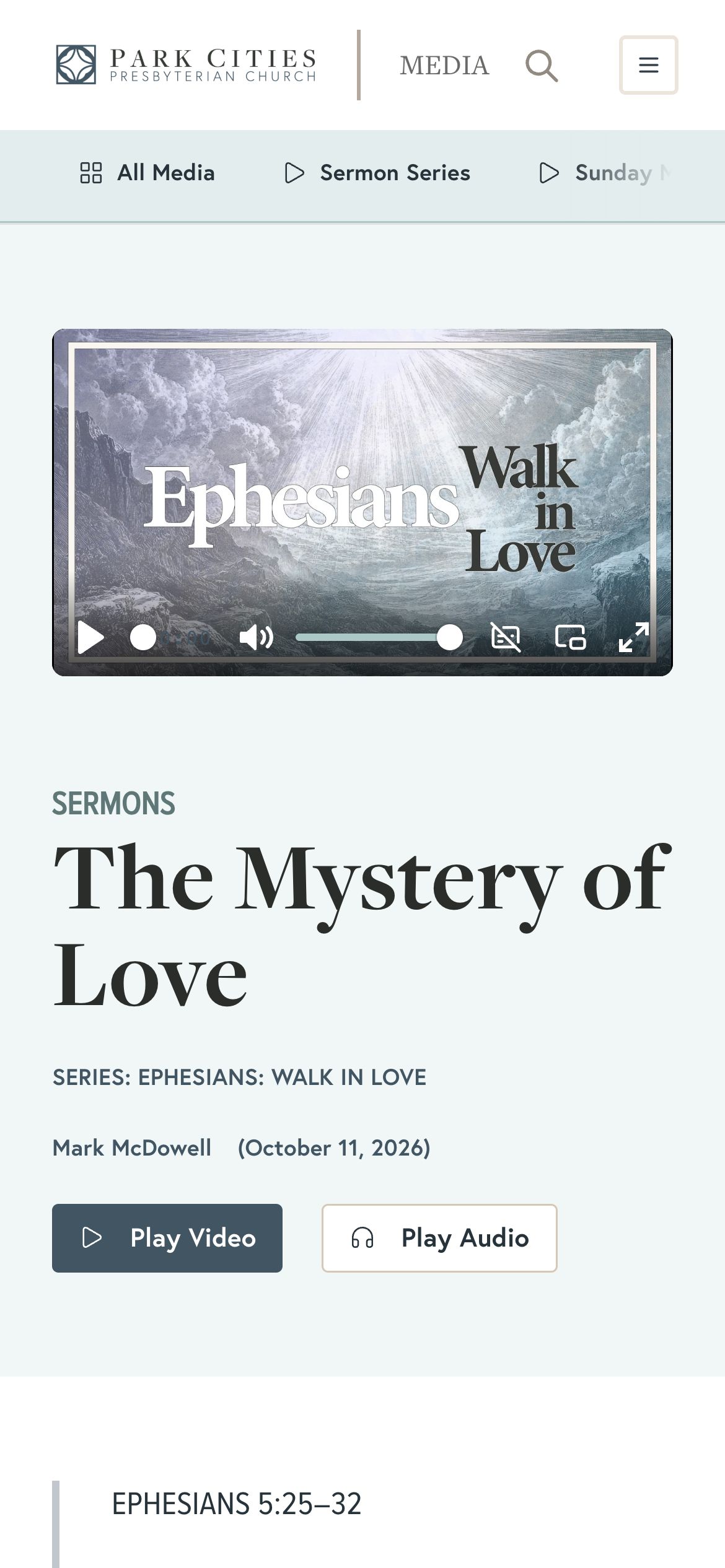
- Filterable media library with a player that keeps playing as visitors browse.
- Full-page static caching and a Statamic 6 upgrade before launch.
Enduring, not trendy
PCPC's direction was clear from discovery: a site that could last as long as the old one had, classical and Presbyterian, with nothing that would look dated in a year. The chapel dates to the 1930s and the sanctuary to the 1950s, and that architecture gave us a visual language to work from.
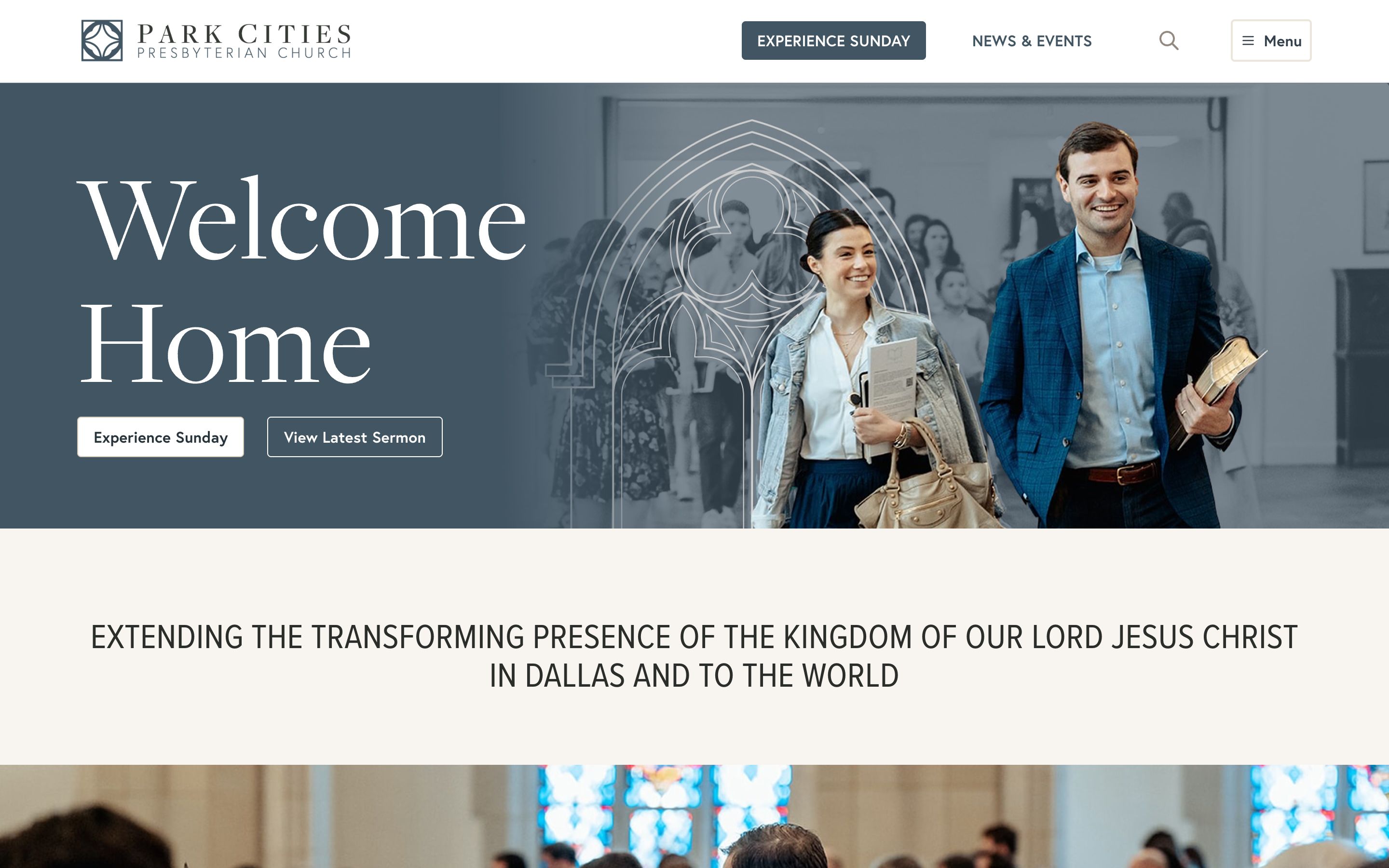
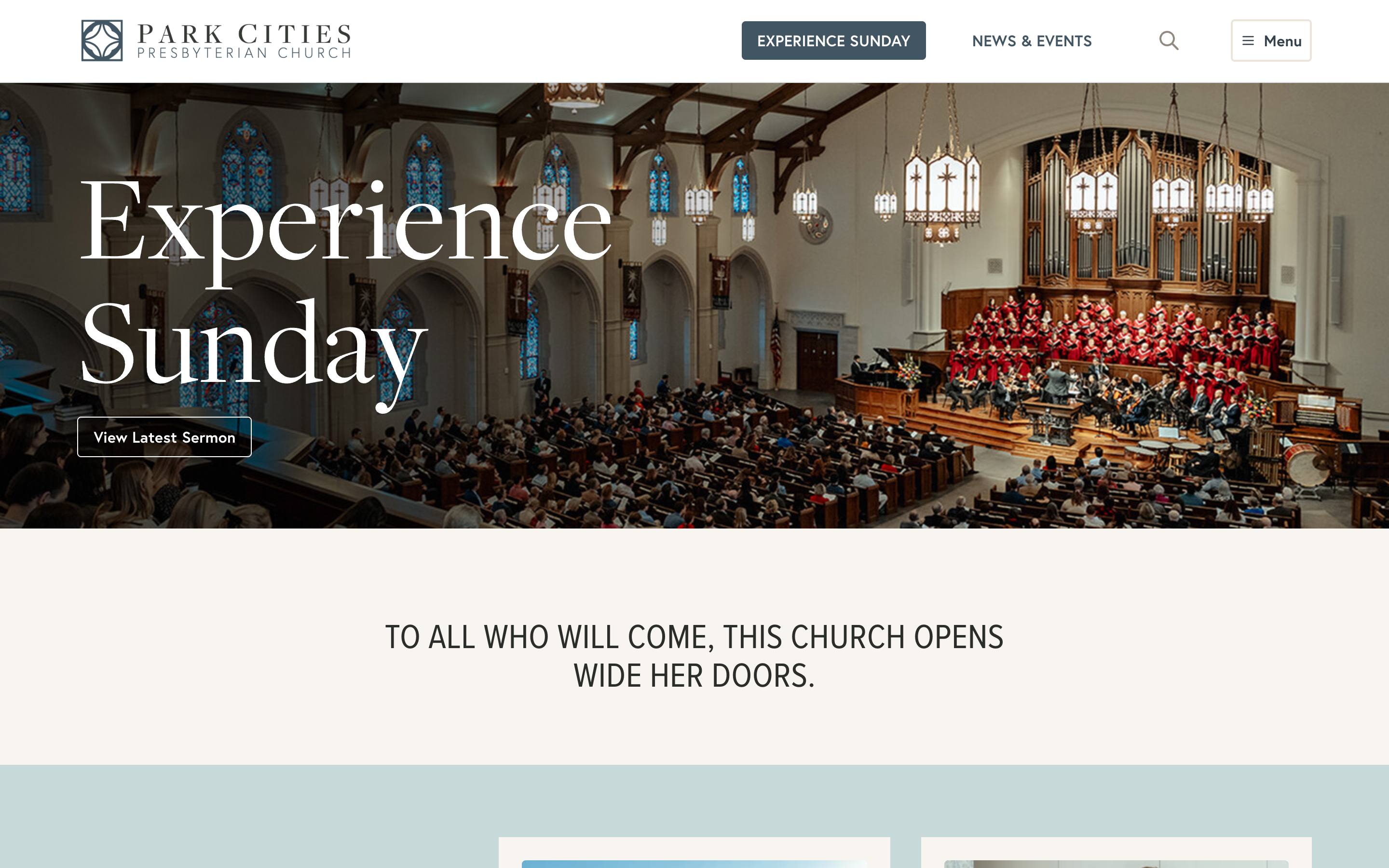
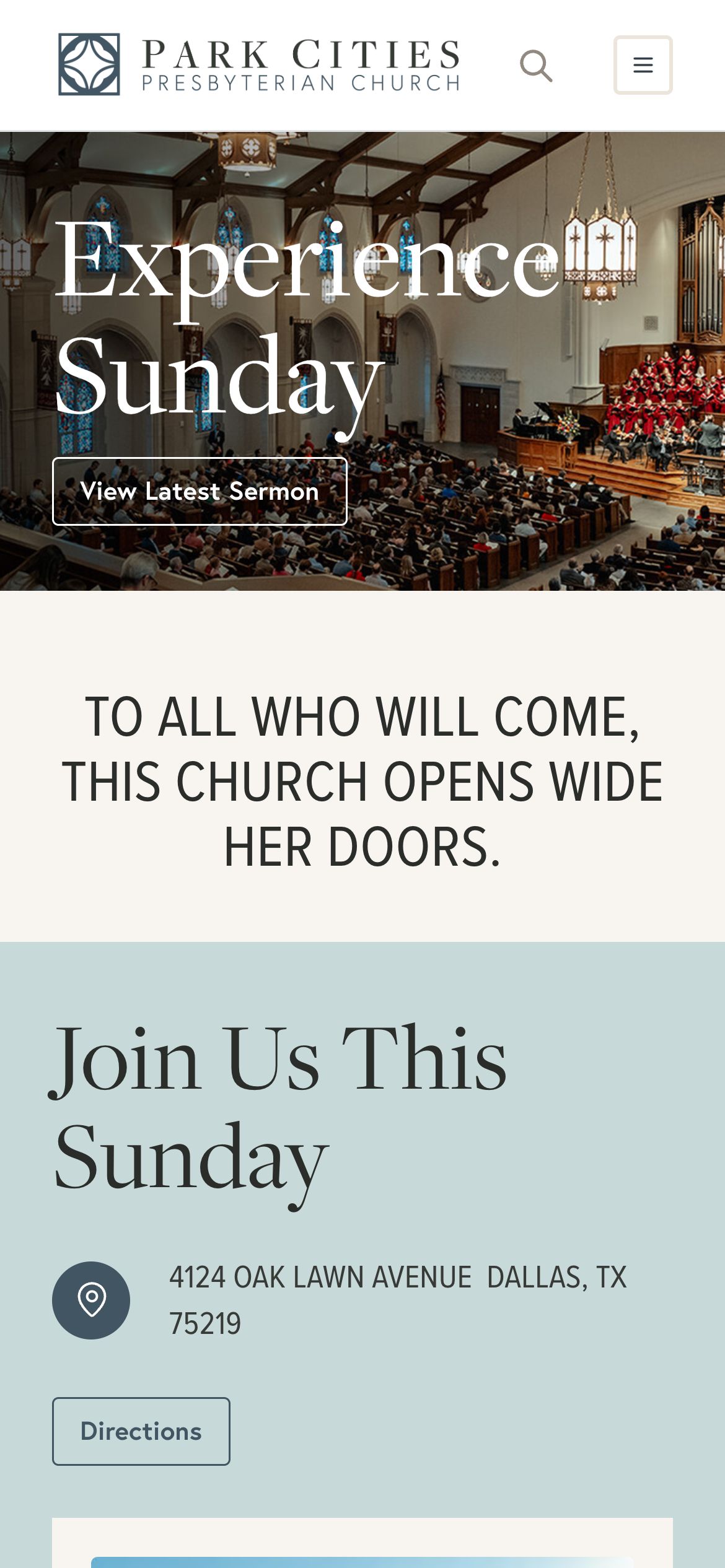
Our UX lead, Craig Van Korlaar, built a design system around generous white space, serif headlines, and line art drawn from Gothic arches, echoing the church's own buildings. On the homepage, that line art is layered over photos of the congregation, so the first thing a guest sees is the church itself.
Fewer choices, clearer paths
A church this active can look overwhelming online. PCPC runs about 15 weekday Bible studies, a parish ministry that covers neighborhoods across Dallas, and a full calendar for every age. The old navigation put all of it in front of everyone, under labels that made sense to members but not to newcomers.
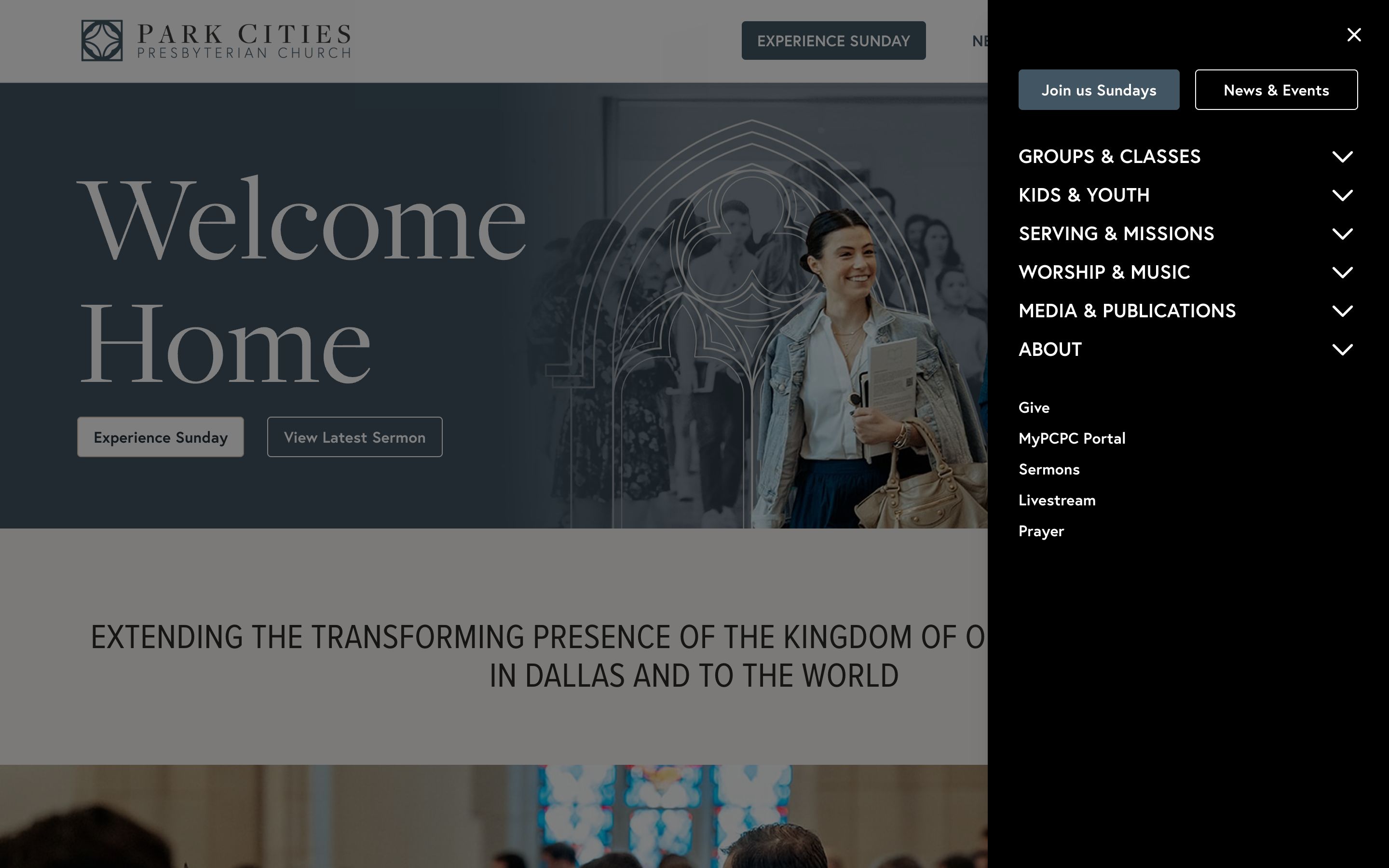
In discovery, we mapped roughly 177 pages from the old site and rebuilt the structure around four audiences: prospective visitors, people not yet connected, engaged regulars, and staff. The header now offers just two actions, Experience Sunday and News & Events, and everything else lives in one menu grouped by how people get involved.
35 years of sermons, moved without losing the thread
The hardest part of the project was the archive. PCPC's sermons, weekday studies, Sunday school recordings, orders of worship, and podcasts lived in Symphony, and the weekly "Every Thought Captive" devotional lived on a second Symphony site. About 8,000 media items, going back to 1991, had to come across with their audio, series, speakers, and ministries intact.
We built one importer for sermons, studies, speakers, series, and the rest of the archive, plus a companion importer for the devotionals. The importer runs in dependency order (books of the Bible, media types, speakers, series, then media), skips anything it has already brought over, and supports dry runs and a mode that fills in only missing audio, so it can be re-run safely as often as needed.
That mattered because the old data didn't always line up with today's systems. Midway through, we found that legacy group numbers no longer matched Ministry Platform, so sermons and studies were attaching to the wrong groups. We matched groups by name instead and re-ran the import cleanly. PCPC's audio, more than 250 GB of it, was already in Wasabi cloud storage, so the importer links each sermon to its existing file and downloads only what's missing.
Fast to browse, easy to keep listening
A large archive is only useful if it's quick to browse. As the library filled up during the build, filtering by speaker, book, or year slowed to 10 to 15 seconds. We reworked how the site stores and refreshes filter results, then rewrote the filter queries to run directly against indexed database fields once the full archive was in, so filtering stays quick at 8,000 items.
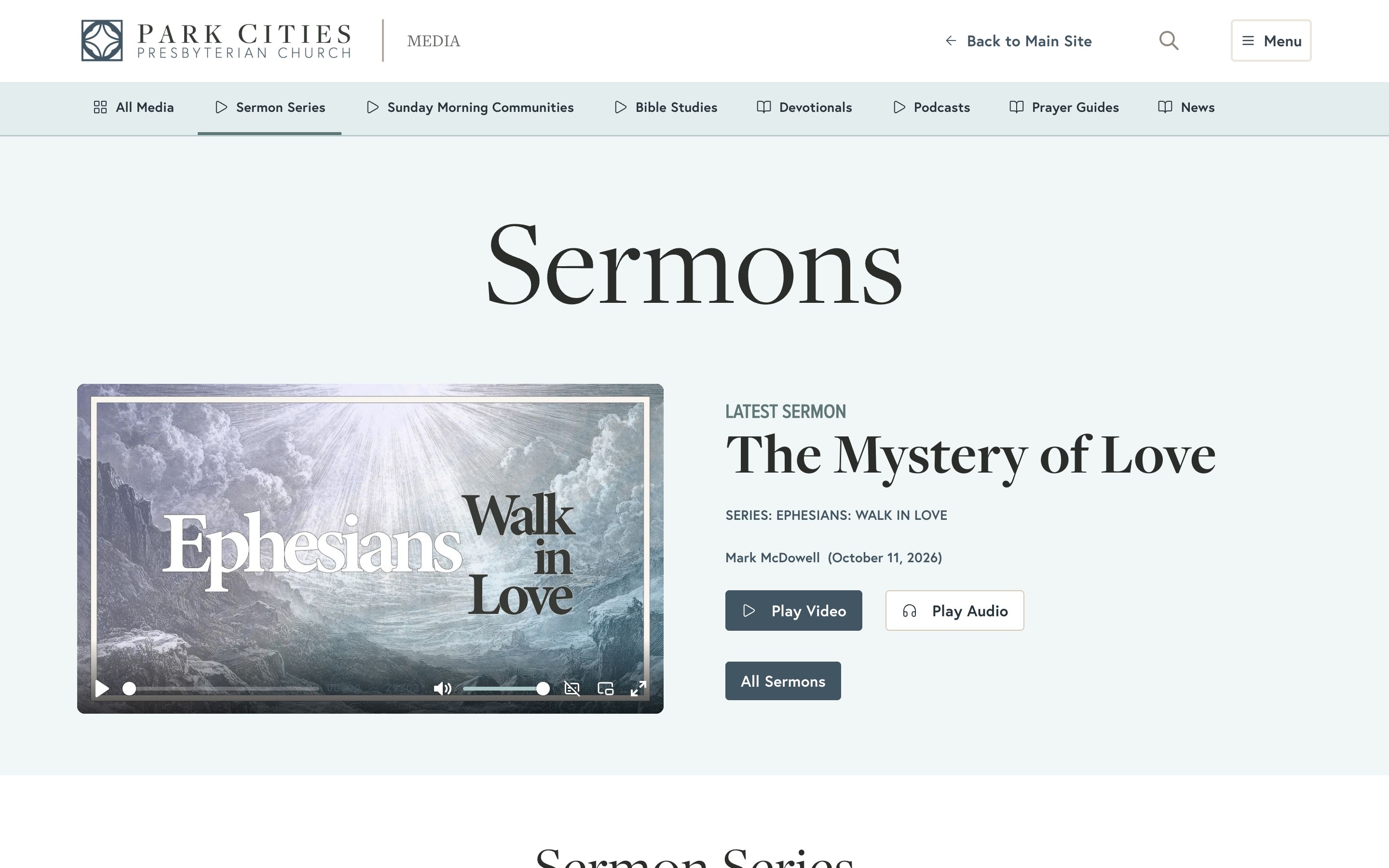
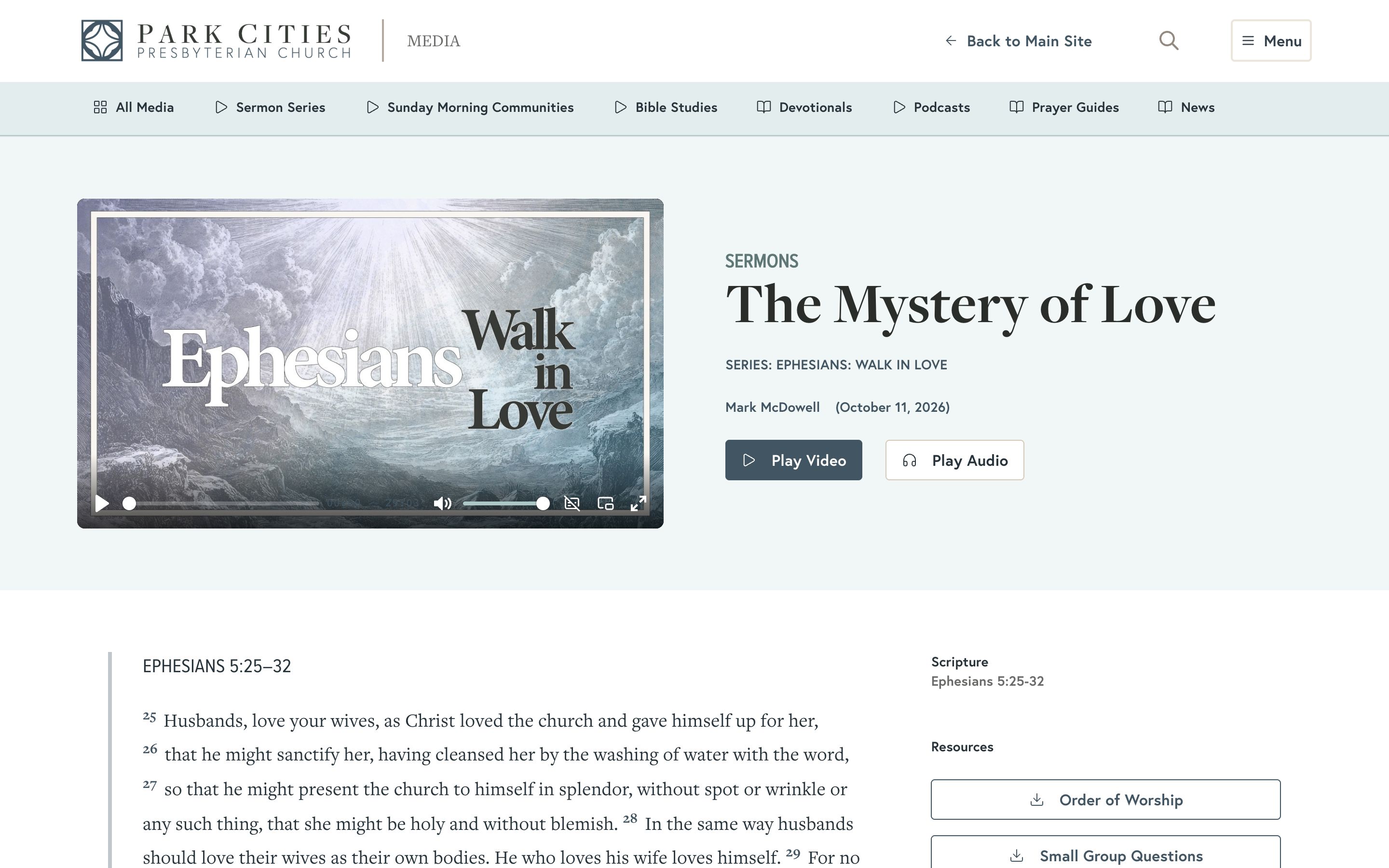
Each sermon page brings together the video, the audio, the scripture passage, and the resources that go with it, like the order of worship and small-group questions. Press play and the sermon keeps going in a persistent player while you move around the site, on desktop and on phones.
Ministry Platform as the source of truth
PCPC already managed events, registrations, and volunteer opportunities in Ministry Platform, its church management system. The widgets worked, but search engines couldn't see what was inside them, and staff were cleaning up event data by hand to make it presentable.
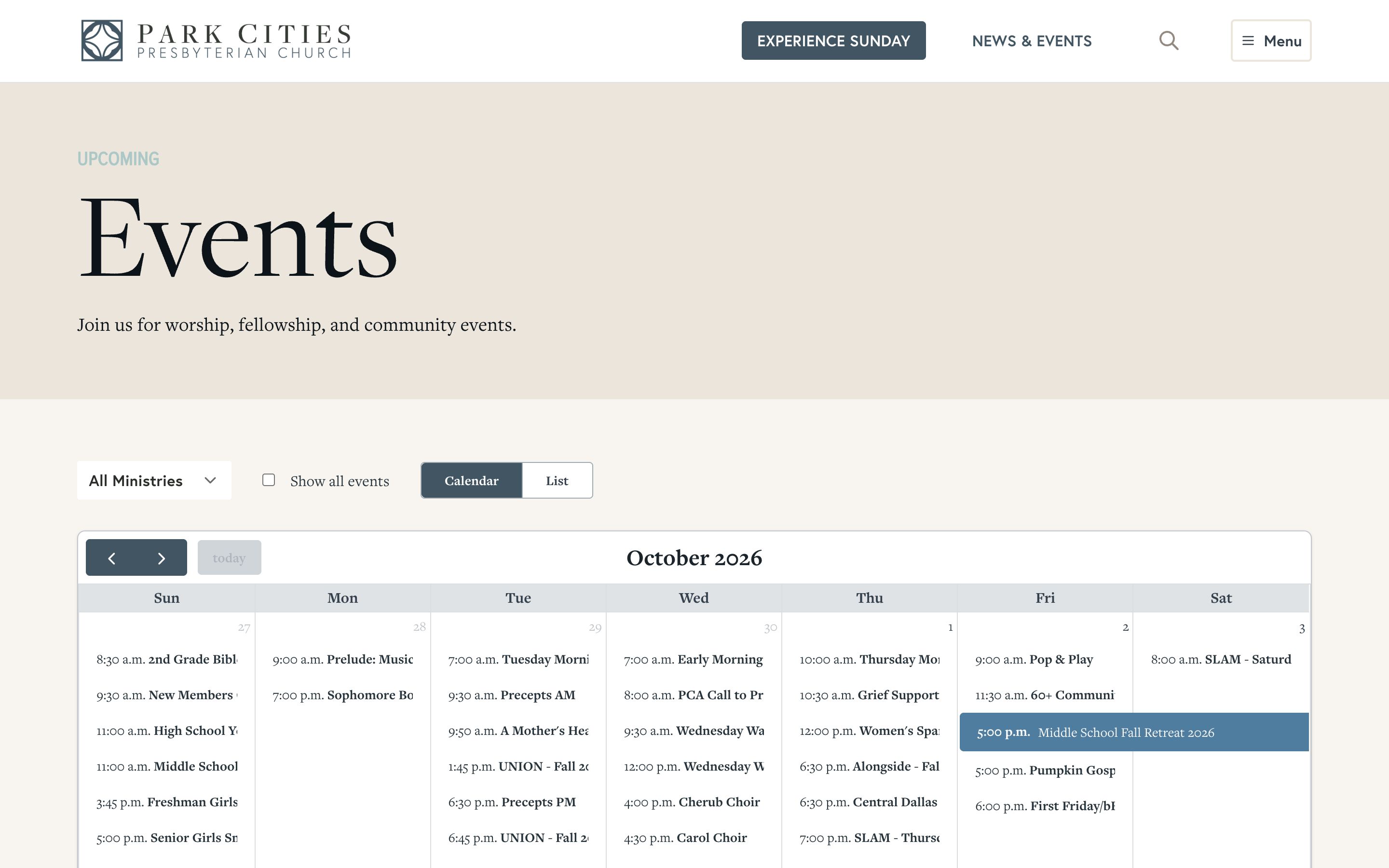
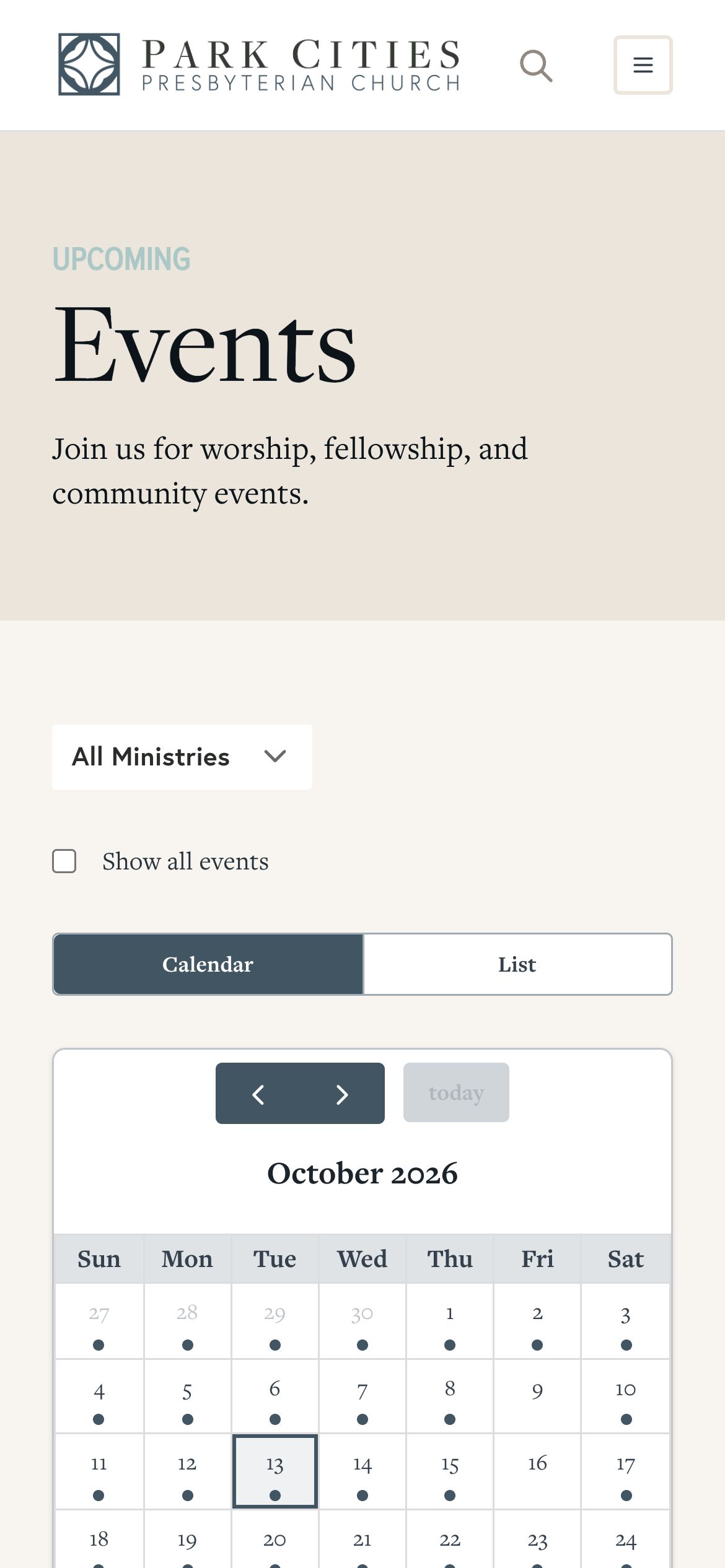
We synced events, volunteer opportunities, parishes, and ministries from Ministry Platform into the site as real pages that search engines can index and visitors can filter. Registration stays in Ministry Platform, embedded right on the event page. Staff enter an event once in Ministry Platform, and it appears on the website, ready to filter and register.
Built for a small team to run
PCPC's web team is small, so the site had to be hard to break and easy to keep current. We delivered a page builder with 29 content blocks, including blocks that pull in live events, staff, opportunities, sermons, and prayer guides. Editors choose content, and the design system takes care of layout.
The site serves prebuilt pages straight from the web server instead of rebuilding them on every visit. Before launch, we also moved it to Statamic 6, the newest version of its content system, so PCPC didn't start life with an upgrade already due.
PCPC hosts the site on its own servers. We handed the platform to their web manager, who led the launch in August 2026 and has kept building on it since.
Explore another project.


Want a site your whole church will use?
Start with the free church website report, or get a free review of your current site.